Showing posts with label Osbert Sitwell. Show all posts

Thursday, August 8, 2013

TELEGRAM OSCAR


She possessed many letters and telegrams from Wilde, and always maintained that he stood head and shoulders above all his contemporaries in respect of being a master of the wire as a literary medium.  It was her intention to edit and bring out a book entitled The Collected Telegrams of Oscar Wilde.


From: “Ada Leverson” in Osbert Sitwell, Noble Essences, New York, Little Brown & Company, 1950.


Wednesday, July 10, 2013

CAMORRA


   The Camorra, the union of disputatious persons, is a secret society which for many years dominated Naples.  Originally, so far as can be traced, a league of prisoners formed for good fellowship and mutual aid, it gradually spread through many branches of Neapolitan society. 

   There was a grand master, whose name no one was supposed to know, and a court of judges, picked from the twelve branches of the league.  Each branch was composed of a number of semi-independent groups, politicians, blackmailers, smugglers, or thieves.  The judges met in secret and sentenced in secret.  


   Those who refused them obedience died, as a long list of unpunished murders testified. The old Cammoristi were helped, criminals in its ranks mysteriously escaped punishment ; and respectable citizens submitted to its blackmail rather than fight it.  It hung like a shadow over Naples.

From The Times, London, 13 March 1911.


Saturday, July 6, 2013

INDIVIDUAL VOICES


Henry accompanied me back to school in the evening – but I recall nothing of the journey.  The light had gone out of the day.  Fortunately, as soon as I arrived, it was time to go to bed . . . . But I slept very badly that summer, and the trains, with their puffing and hooting, filled me more than ever with nostalgia. . . . I lay awake listening to them and to the croaking of the frogs, a sound new to me.  Even then I loved that music, ragged and of the mud, muddy yet so boastful and personal that, much more personal than in birdsong, one could detect individual voices . . . .


Osbert Sitwell, The Scarlet Tree, 1945


Tuesday, May 14, 2013

HALF PAST


“I arrived in London at six in the morning, and reported to the Reserve Battaliion, already in course of formation.  In the afternoon, I went to say good-bye to many friends, who, as it happened, were never to return to England.  Two or three of the most confident I heard instructing their servants to pack their evening clothes, since they would need them in a week or two in Berlin . . . . Later I called on my Grandmother Londesborough, now grown a very old lady.  She was, as I have explained earlier, a great-niece of Wellington’s, and perhaps some lingering anti-Napoleonic tradition inspired her parting remark to me, 'It’s not the Germans but the French I’m frightened of.’” 


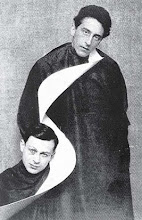
Note: Sad, disturbing.  Weirdly exciting.  Like Jacques-Louis David's Death of Marat (first above) and Cecil Beaton's enervating photographic portrait of Osbert Sitwell (second above). (Below I've inserted the image-personification of France, Marianne, in her Brigitte Bardot incarnation, which is neither sad, disturbing, nor weirdly exciting, but as Eddie Cochran might have put it, Something Else.)


Lifting last night, temporarily, our family moratorium on television news, I saw a pretty, deeply unintelligent woman named Tamara Holder solemnly opine that since it was the case that the Watergate scandal occurred in the early1970s and we now live and breathe in A.D. 2013, the possibility of similar bad behavior no longer existed because This Is A New Era.  She had a nice smile and actually seemed sincere and to believe this. It reminded me a little, not a lot (because I honestly think she was simply stupid, rather than venal), of Jay Carney's pronouncement last week that further Benghazi inquiry was irrelevant because September 11, 2012 was so long ago. (One commentator said Carney spoke of last autumn as if it was temporally identical to the Punic Wars period.  Another compared him unfavorably to the memorable Baghdad Bob.)


Like Osbert’s, my own eyes rose unbelievably high in my head.  Finally managing to lower them a little, I fixed and focused on a bright point beyond mountains, horizon and the evil tetrahedron I saw in the movie Oblivion on Sunday.


Andy is now doing exceedingly well in his new K-9 cart, the important news event in his and our world. Advancing along with him, but never as quickly, smartly or cheerfully, we hope to move less jerkily through life, to lighten the tone.


Trying to embrace my own life changes:  Where/how will all of this come out?  The various movie "coming attractions" I've seen lately (there have been a lot of them) populate and crowd each evening's dreams.  I would like very much to end up in some extraordinary  bedroom overlooking the Mexican Pacific, a sunny infinity pool in close proximity, rather than as CGI-roadkill.  (By the way, we've reinstated the tv news moratoriun.  One night was enough.)


Dave Davies, risen from the fallen, plays in Bethlehem in a few weeks.  Jane and I have good seats and a reservation at what seems  to be a fine old hotel erected during in that once-dynamic city during a prouder, less insipid era.  I have never visited Bethlehem before; either of them.


Dave's new record has the nice title, "I Will Be Me."


Jane often, upbeat, says "You do you."  (Aleister Crowley was long-winded, downbeat and desperate in comparison.) 


Leonard Cohen said:  


"So long, Marianne, 
it's time that we began
To laugh and cry 
and cry and laugh about it all again."  


I've never been too sure about Leonard Cohen, actually. 


But I love Brigitte Bardot.


John Cale: Half Past France (Link)

Text:  Osbert Sitwell, Great Morning (1949)  

We Don't Want To Lose You (But We Think You Ought To Go) (Link)