“I arrived in London at six in the morning, and reported to the Reserve Battaliion, already in course of formation. In the afternoon, I went to say good-bye to many friends, who, as it happened, were never to return to England. Two or three of the most confident I heard instructing their servants to pack their evening clothes, since they would need them in a week or two in Berlin . . . . Later I called on my Grandmother Londesborough, now grown a very old lady. She was, as I have explained earlier, a great-niece of Wellington’s, and perhaps some lingering anti-Napoleonic tradition inspired her parting remark to me, 'It’s not the Germans but the French I’m frightened of.’”

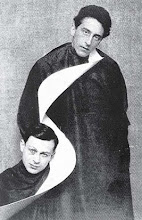
Note: Sad, disturbing. Weirdly exciting. Like Jacques-Louis David's Death of Marat (first above) and Cecil Beaton's enervating photographic portrait of Osbert Sitwell (second above). (Below I've inserted the image-personification of France, Marianne, in her Brigitte Bardot incarnation, which is neither sad, disturbing, nor weirdly exciting, but as Eddie Cochran might have put it, Something Else.)
Lifting last night, temporarily, our family moratorium on television news, I saw a pretty, deeply unintelligent woman named Tamara Holder solemnly opine that since it was the case that the Watergate scandal occurred in the early1970s and we now live and breathe in A.D. 2013, the possibility of similar bad behavior no longer existed because This Is A New Era. She had a nice smile and actually seemed sincere and to believe this. It reminded me a little, not a lot (because I honestly think she was simply stupid, rather than venal), of Jay Carney's pronouncement last week that further Benghazi inquiry was irrelevant because September 11, 2012 was so long ago. (One commentator said Carney spoke of last autumn as if it was temporally identical to the Punic Wars period. Another compared him unfavorably to the memorable Baghdad Bob.)
Like Osbert’s, my own eyes rose unbelievably high in my head. Finally managing to lower them a little, I fixed and focused on a bright point beyond mountains, horizon and the evil tetrahedron I saw in the movie Oblivion on Sunday.
Andy is now doing exceedingly well in his new K-9 cart, the important news event in his and our world. Advancing along with him, but never as quickly, smartly or cheerfully, we hope to move less jerkily through life, to lighten the tone.
Trying to embrace my own life changes: Where/how will all of this come out? The various movie "coming attractions" I've seen lately (there have been a lot of them) populate and crowd each evening's dreams. I would like very much to end up in some extraordinary bedroom overlooking the Mexican Pacific, a sunny infinity pool in close proximity, rather than as CGI-roadkill. (By the way, we've reinstated the tv news moratoriun. One night was enough.)
Dave Davies, risen from the fallen, plays in Bethlehem in a few weeks. Jane and I have good seats and a reservation at what seems to be a fine old hotel erected during in that once-dynamic city during a prouder, less insipid era. I have never visited Bethlehem before; either of them.
Dave's new record has the nice title, "I Will Be Me."
Jane often, upbeat, says "You do you." (Aleister Crowley was long-winded, downbeat and desperate in comparison.)
Leonard Cohen said:
"So long,
Marianne,
it's time that we
began
To laugh and
cry
and cry and laugh
about it all again."
I've never been too sure about Leonard Cohen, actually.
But I love Brigitte Bardot.

John Cale: Half Past France (Link)
Text:
Osbert Sitwell, Great
Morning (1949)
We
Don't Want To Lose You (But We Think You
Ought To Go) (Link)