Showing posts with label Great Morning. Show all posts

Tuesday, May 14, 2013

HALF PAST


“I arrived in London at six in the morning, and reported to the Reserve Battaliion, already in course of formation.  In the afternoon, I went to say good-bye to many friends, who, as it happened, were never to return to England.  Two or three of the most confident I heard instructing their servants to pack their evening clothes, since they would need them in a week or two in Berlin . . . . Later I called on my Grandmother Londesborough, now grown a very old lady.  She was, as I have explained earlier, a great-niece of Wellington’s, and perhaps some lingering anti-Napoleonic tradition inspired her parting remark to me, 'It’s not the Germans but the French I’m frightened of.’” 


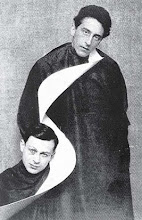
Note: Sad, disturbing.  Weirdly exciting.  Like Jacques-Louis David's Death of Marat (first above) and Cecil Beaton's enervating photographic portrait of Osbert Sitwell (second above). (Below I've inserted the image-personification of France, Marianne, in her Brigitte Bardot incarnation, which is neither sad, disturbing, nor weirdly exciting, but as Eddie Cochran might have put it, Something Else.)


Lifting last night, temporarily, our family moratorium on television news, I saw a pretty, deeply unintelligent woman named Tamara Holder solemnly opine that since it was the case that the Watergate scandal occurred in the early1970s and we now live and breathe in A.D. 2013, the possibility of similar bad behavior no longer existed because This Is A New Era.  She had a nice smile and actually seemed sincere and to believe this. It reminded me a little, not a lot (because I honestly think she was simply stupid, rather than venal), of Jay Carney's pronouncement last week that further Benghazi inquiry was irrelevant because September 11, 2012 was so long ago. (One commentator said Carney spoke of last autumn as if it was temporally identical to the Punic Wars period.  Another compared him unfavorably to the memorable Baghdad Bob.)


Like Osbert’s, my own eyes rose unbelievably high in my head.  Finally managing to lower them a little, I fixed and focused on a bright point beyond mountains, horizon and the evil tetrahedron I saw in the movie Oblivion on Sunday.


Andy is now doing exceedingly well in his new K-9 cart, the important news event in his and our world. Advancing along with him, but never as quickly, smartly or cheerfully, we hope to move less jerkily through life, to lighten the tone.


Trying to embrace my own life changes:  Where/how will all of this come out?  The various movie "coming attractions" I've seen lately (there have been a lot of them) populate and crowd each evening's dreams.  I would like very much to end up in some extraordinary  bedroom overlooking the Mexican Pacific, a sunny infinity pool in close proximity, rather than as CGI-roadkill.  (By the way, we've reinstated the tv news moratoriun.  One night was enough.)


Dave Davies, risen from the fallen, plays in Bethlehem in a few weeks.  Jane and I have good seats and a reservation at what seems  to be a fine old hotel erected during in that once-dynamic city during a prouder, less insipid era.  I have never visited Bethlehem before; either of them.


Dave's new record has the nice title, "I Will Be Me."


Jane often, upbeat, says "You do you."  (Aleister Crowley was long-winded, downbeat and desperate in comparison.) 


Leonard Cohen said:  


"So long, Marianne, 
it's time that we began
To laugh and cry 
and cry and laugh about it all again."  


I've never been too sure about Leonard Cohen, actually. 


But I love Brigitte Bardot.


John Cale: Half Past France (Link)

Text:  Osbert Sitwell, Great Morning (1949)  

We Don't Want To Lose You (But We Think You Ought To Go) (Link)

Thursday, May 9, 2013

LIVE LIFE (THE PASSING SHOW)


“Who could wonder that foreigners loved London?  Though as different from Vienna or Paris as Peking, it was no less essentially a capital, with all the attractions of the centre of an Empire.It remained unique in being a masculine city, as it had been throughout its history, created to the same degree for men as Paris for women.  The luxury shops were unrivalled in their appeal to male tastes, were full of cigarettes, and objects made in leather, glass or silver, better than those to be seen anywhere in foreign capitals; solid, plain, unimaginative, but showing the English feeling for material; the English sobriety. As for suits, shirts, shoes, ties, hats, London was acknowledged throughout the world, by all races, by all colours, [1] to set the fashion for men.  And these years, 1913 and ’14, were the last when there was a successor to the long line of fops, macaronis, dandies, beaux, dudes, bucks, blades, bloods, swells and mashers, who for so many centuries had given life to the London world of pleasure.  To these was now added the nut or, more jocularly, the k-nut, as personified by a young actor, Mr. Basil Hallam, who in this respect both summed up and set the tone in a song entitled  Gilbert The Filbert, the Colonel of the Nuts!’ – the refrain ran 


I’m Gilbert the Filbert, the Nut with a K,

The pride of Piccadilly, the blasé roué,
Oh, Hades, the ladies all leave their wooden huts
For Gilbert the Filbert , the Colonel of the Nuts. 


  Dressed in a grey tall-hat and a morning-coat, Hallam gave a rather languid rendering of this song at the Palace Theater every night in the Passing Show, a revue which was running throughout the summer of 1914 and until after the outbreak of the war.  It was no unusual greeting for a young man, wearing a new suit, to be told, What a k-nut you look !’  The nut must be thin, clean-shaven except for a small cut moustache, and have an air of concave and fatigued elegance, in this taking after his Dundreary grandfather rather than his father the swell.  On the other hand, he had to dance with vigour and ease, in the new style . . . The nut died fighting in the trenches of 1914, and Mr. Basil Hallam, his amiable exemplifier, was killed in the spring of the following year.  He was in a captive balloon with a rather inexperienced observer, and when the balloon was shot down this man had difficulty in fixing his parachute harness.  Hallam stayed to help him and was too late to save himself.”

[1]  The tradition survived.  In 1925, when I was in New York, I asked a Negro singer, Taylor Gordon, how he liked Aldous Huxley, whom he had met; and received a rich-voiced reply, When I think that that man comes from the capital of the world’s tailoring !”


NOTE: Breaking from dizzy-making work today to read about Basil Hallam in Osbert Sitwell’s Great Morning (1948) was restorative and uplifting. 

  Unfortunately, the contrast this afternoon between vivacious and virtuous Basil and serially dishonest, sanctimonious, hideously ugly Rep. Elijah Cummings, Maryland’s ranking troll in Congress, could not have been more distressing. 

  Addressing State Department officers testifying about the worst work fuck-up they had ever witnessed, and the Benghazi victims’ families, Cummings said:   “As I listen to your testimony I could not help but think of something that I said very recently -- two years ago now -- in a eulogy for a relative. I said that death is a part of life, so often we have to find a way to make life a part of death.” 

 The brave, hapless, doomed, Benghazi dead were what – 30 years old?  35?   40?

 Words As Shields; Words As Weapons. Contempt, Theft, Murder. Shit happens.

 Caroline said something to me recently that I will never forget:

 We’re living in the Dark Ages, but even during the Dark Ages people managed to live pleasant, productive lives.