Tuesday, November 8, 2011

Giotto Devil Detail In Assisi


A detail of a fresco by Giotto in the Basilica of St Francis in Assisi is seen in this picture released on November 5, 2011. Art restorers have discovered the figure of a devil hidden in the clouds at the top of fresco number 20 in the cycle of the scenes in the life and death of St Francis painted by Giotto in the 13th century. The discovery was made by Italian art historian Chiara Frugone and shows a profile of a figure with a hooked nose, a sly smile, and dark horns hidden among the clouds.


ROME (REUTERS).-                               

Art restorers have discovered the figure of a devil hidden in the clouds of one of the most famous frescos by Giotto in the Basilica of St Francis in Assisi, church officials said on Saturday. 


The devil was hidden in the details of clouds at the top of fresco number 20 in the cycle of the scenes in the life and death of St Francis painted by Giotto in the 13th century.

The discovery was made by Italian art historian Chiara Frugone. It shows a profile of a figure with a hooked nose, a sly smile, and dark horns hidden among the clouds in the panel of the scene depicting the death of St Francis.

The figure is difficult to see from the floor of the basilica but emerges clearly in close-up photography.

Sergio Fusetti, the chief restorer of the basilica, said Giotto probably never wanted the image of the devil to be a main part of the fresco and may have painted it in among the clouds "to have a bit of fun."

The master may have painted it to spite someone he knew by portraying him as a devil in the painting, Fusetti said on the convent's website.

The artwork in the basilica in the convent where St Francis is buried was last restored after it was severely damaged by an earthquake in 1997.


(Reporting By Philip Pullella; Editing by Sophie Hares)


Fresco number 20


Tomb of St. Francis of St. Francis of Assisi


People Get Ready (The Iceman Cometh): Siberians Share DNA With Extinct Human Species!!


Man's ancestors mated with Neanderthals and other related hominids during human evolution, according to a new study.


      Researchers have found that people in East Asia share genetic material with Denisovans, who got the name from the cave in Siberia where they were first found.  Man's ancestors mated with Neanderthals and other related hominids during human evolution, according to a new study.

      The new study covers a larger part of the world than earlier research, and it is clear that it is not as simple as previously thought.


Denisova Cave 


      Professor Mattias Jakobsson, of Uppsala University in Sweden who conducted the study together with graduate student Pontus Skoglund, said hybridisation took place at several points in evolution and the genetic traces of this can be found in several places in the world.

      He said: "We'll probably be uncovering more events like these.


      "Previous studies have found two separate hybridisation events between so-called archaic humans - different from modern humans in both genetics and morphology - and the ancestors of modern humans after their emergence from Africa.

      "There was hybridisation between Neanderthals and the ancestors of modern humans outside of Africa and hybridisation between Denisovans and the ancestors of indigenous Oceanians.


Valley of the Denisova Cave


       "The genetic difference between Neanderthals and Denisovans is roughly as great as the maximal level of variation among us modern humans."

      The Uppsala scientists' study demonstrates that hybridisation also occurred on the East Asian mainland.


      The connection was discovered by using genotype data in order to obtain a larger data set.
 
      Complete genomes of modern humans are only available from some dozen individuals today, whereas genotype data is available from thousands of individuals.

      These genetic data can be compared with genome sequences from Neanderthals and a Denisovan which have been determined from archeological material.

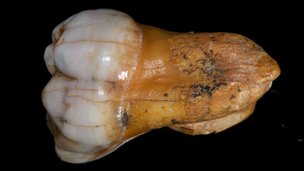
     Only a pinky finger and a tooth have been described from the latter.


 The Denisova tooth

  
      Genotype data stems from genetic research where hundreds of thousands of genetic variants from test panels are gathered on a chip.

      However, this process leads to unusual variants not being included, which can lead to biases if the material is treated as if it consisted of complete genomes.

      Prof Jakobsson and Skoglund used advanced computer simulations to determine what this source of error means for comparisons with archaic genes and have thereby been able to use genetic data from more than 1,500 modern humans from all over the world.

      Prof Jakobsson said: "We found that individuals from mainly Southeast Asia have a higher proportion of Denisova-related genetic variants than people from other parts of the world, such as Europe, America, West and Central Asia, and Africa.


     "The findings show that gene flow from archaic human groups also occurred on the Asian mainland."


       Skoglund added: "While we can see that genetic material of archaic humans lives on to a greater extent than what was previously thought, we still know very little about the history of these groups and when their contacts with modern humans occurred."

     Because they find Denisova-related gene variants in south east Asia and Oceania, but not in Europe and America, the researchers suggest that hybridisation with Denisova man took place about 20 million years ago, but could also have occurred earlier.


      This is long after the branch that became modern humans split off from the branch that led to Neanderthals and Denisovans some 300,000 to 500,000 years ago.

    Prof Jakobsson said: "With more complete genomes from modern humans and more analyses of fossil material, it will be possible to describe our prehistory with considerably greater accuracy and richer detail." 
      The findings were published in the online edition of the journal PNAS.


__________________
_________________ 


On the cusp of the Tunguska Event


NOTE:  This story interests me for several reasons:

I.   Jane's been studying this subject in school this term, reading William Goldman's The Inheritors, as well as other relevant scientific and anthropological material.  It's on her mind, in our conversations and review sessions, and you know: These grades go to Colleges!!.


Artist's renderng of Tunguska Event (pre-impact)


II.  Could anything be more fascinating than the study of Early Man?   My Physical Anthropology course at Swarthmore College, taught by Professor Steven Piker, was utterly engrossing -- every week a serious adventure in learning and discovery.  I will always remember Professor Piker's deep love and knowledge of his subject, his passionate, infectious enthusiasm and his unfailing courtesy and personal kindnessI also recall the very weird "National Character" school of physical anthropology which developed in the 1940s and how it seemed to elevate bigotry and gross generalization to the level of being a unified theory of natureUber-simplistic explanations of complex phenomena may prove false, but they can have mad memorability and panache.


Tunguska Event aftermath


III.  When I was very young, my father told me on several occasions that his own college anthropology professor once advised him that he was "a perfect example of Transalpine Man."  My conversations with my father tended to be fragmentary (like much of ancient history) and I have no idea what he meant by this.  I wanted to research this because I thought that if my own father was a perfect example of Transalpine Man,  I must at least be a pretty good specimen and this might be a good resume item.

(Speaking of Siberia, as we were a short minute ago, I absolutely believe that the other side of my family tree came through Ellis Island shortly after landing on this planet as a result of the 1908 Tunguska Event. All the facts fit. I don't believe this can be disproven.)

Unfortunately,  my research was pretty fruitlessThe only references I could find to "transalpine men" concerned a Swiss Catholic order called the Transalpine Redemptorists and these were clearly irrelevant.  

For the record,Webster's defines "transalpine" as follows: 


"Adjective
1.  situated beyond the Alps, especially toward the north as viewed from Italy.
2.  passing or extending across or through the Alps: a transalpine railway.
3. of, pertaining to, or characteristic of peoples or lands beyond the Alps.

Noun
4. native or inhabitant of a country beyond the Alps.


Tunguska Event aftermath 2


My father's "people," such as they are (if you're nice to me, I'll never introduce them to you and you won't need to count the silverware so often and so carefully), have no obvious connection to the Alps My father himself preferred flatter, more urban sections of France, Italy and Switzerland.   

If anyone can shed any light on this very odd and obscure anthropological description, however, I'm all (Transalpine) Ears, like my maternal ancestor Mr. Spock, my only celebrity relative except for Major General Smedley Darlington Butler (but that's through marriage).


Tunguska CraterI can see my house from here.


Musical Entertainment (for hominids and others):  


Query of the Week:  What can possibly surpass the unsurpassable People Get Ready by The Impressions?  

One of my most vivid and stirring memories is picking up the telephone at the ABC Records offices at 1414 Avenue of the Americas early one morning in 1977 and finding on the other end of the line a person introducing himself as Jerry Butler, who was calling to speak to our office head, Barbara Harris.  

Hearing the beautiful, sonorous voice, I found myself saying without thinking: 

"The Ice Man?"  

Mr. Butler said YesIt was quite a thrill. 

(N.b.  The Ice Man does not appear on People Get Ready.) 

Monday, November 7, 2011

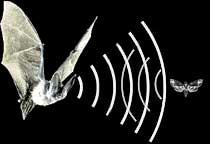
U Can't Touch This (Echolocation)


blind, Echolocation
pointed me toward
the razortipped ringfence
around the hole 
in your heart


Later Sonnet (Edwin Denby)


In a hotelroom a madman
Breaks off armchair leg, brains me
Asleep; clever Paris surgeon
Extracts stomach; been killed nearly
Who hasn’t, the much worse rents of love
Even of selfesteem survived
Left shamefully but glad to still live
Watch the rich hide, watch the poor hide
Death’s dread; trapped when I turn toward friends
Long dead when I found them, poets
Who when I’m crazed give my heart strength
By their tone of voice they do it
Some of their death-dread can be shook
Jumping across, eyes read a book


Paintings:

Top:  Jean Helion, Untitled, 1943

Bottom: Jean Helion, Untitled, 1943

Sunday, November 6, 2011

"Powerful In His Conceptive Faculty" (The Last Judgment)


Daniele da Volterra, Portrait of Michelangelo, Chalk, 1533, Teylers Museum, Haarlem, The Netherlands


      After his recovery, Michelangelo returned to work, and finished the Last Judgment in a few months.    It was exposed to the public on Christmas Day in 1541.


Michelangelo, The Last Judgment (detail), 1537-41, Sistine Chapel, The Vatican, Rome.


     Time, negligence, and outrage, the dust of centuries, the burned papers of successive conclaves, the smoke of altar-candles, the hammers and the hangings of upholsterers, the brush of the breeches-maker and restorer, have so dealt with the Last Judgment that it is almost impossible to do it justice now.  What Michelangelo intended by his scheme of colour is entirely lost.   Not only did Daniele da Volterra, an execrable colourist, dab vividly tinted patches upon the modulated harmonies of flesh-tones painted by the master; but the whole surface has sunk into a bluish fog, deepening to something like lamp-black around the altar. Nevertheless, in its composition the fresco may still be studied;  and after due inspection, aided by photographic reproductions of each portion, we are not able to understand the enthusiasm which so nobly and profoundly planned a work of art aroused among contemporaries.


John Addington Symonds, Photographic portrait dedicated to Walt Whitman, 1889.


     It has sometimes been asserted that this painting, the largest and most comprehensive in the world, is a tempest of contending forms, a hurly-burly of floating, falling, soaring, and descending figures.  Nothing can be more opposed to the truth.  Michelangelo was sixty-six years of age when he laid his brush down at the end of the gigantic task.  He had long outlived the spontaneity of youthful ardour.  His experience through half a century in the planning of monuments, the painting of the Sistine vault, the designing of facades and sacristies and libraries, had developed the architectonic sense which was always powerful in his conceptive faculty.  Consequently, we are not surprised to find that , intricate and confused as the scheme may appear to an unpractised eye, it is in reality a design of mathematical severity, divided into four bands or planes of grouping.


Michelangelo, The Last Judgment, 1537-41, Sistine Chapel, The Vatican, Rome.


Notes:

1. John Addington Symonds' superb, moving and highly enjoyable The Life of Michelangelo (1893) should be sought out by anyone interested in the artist. A short biography of Symonds, advocate and champion of l'amour de l'impossible, is found Here.

2.  Restoration and cleaning of The Last Judgment was completed in 1994. A short New York Times article concerning the unveiling is found Here.

Saturday, November 5, 2011

The Vengeful Librarians


CIA actively monitors 5 million tweets every day

Updated: Nov 04, 2011 2:32 PM EDT
  
By Andrew Couts
Provided by


          As if we needed any further confirmation that Big Brother is, in fact, watching, the Associated Press reports today that the Central Intelligence Agency has an entire department devoted to monitoring Twitter and Facebook posts. In addition, the CIA briefs President Obama daily on top tweets and popular Facebook posts and trends.

     The arduous task, carried out by a team known as the "Vengeful Librarians," includes sifting through more than 5 million tweets a day. (In total, Twitter's 100 million users publish approximately 140 million tweets every day.) Doing so has enabled the CIA to view how events in the US are being received overseas — like, say, the assassination of Osama bin Laden — as well as allowing the agency to keep tabs on international events, like the uprising in Egypt this spring.


        The CIA's social media monitoring, which is carried out by "several hundred" analysts at a facility in McLean, Virginia, and elsewhere around the US, was started on the recommendation of the 9/11 Commission as a way to bolster the agency's counterterrorism and counterproliferation initiatives.

        Monitored sources include traditional newspapers and television broadcasts, as well as social media. The focus on Twitter began in 2009 after the micro-blogging platform played a key role in the Iranian Green Revolution.

         Because tweets do not always have location data tied to them, the Vengeful Librarians cannot track where exactly the majority of tweets originate. Instead, the intelligence team keeps track of what language tweets are published in. For instance, the team wanted to find out the world reaction to the death of Osama bin Laden. It found that the majority of tweets published in either Urdu (the language of Pakistan), or Chinese were mostly negative. Arabic and Turkic tweets accused Obama of being pro-Israel. Tweets in Hebrew thought Obama's speech was too pro-Arab.


        The CIA team has also used Twitter to monitor reports of real-time events, and can focus on a few Tweeters who are publishing accurate reports. The team found that, in these situations, other Twitter users actively stamp out erroneous information when it is reported, which proves the usefulness of Twitter as a primary source for breaking news.

          So, for those of you out there who forget that what you say online can often be seen by anyone, remember: in some windowless office building in Northeast Virginia, a CIA agent may be watching.


NOTE:  I read this very interesting story, which naturally brings to mind the 1975 motion picture Three Days Of The Condor, featuring Robert Redford, Max von Sydow and Faye Dunaway, on the WTVM- News Leader 9 -- Columbus, Georgia news site, which we follow because our cousin Eudora Linde works there as a producer.  We are all extremely proud of Eudora.


V For ______ (The Island Of Sheep 2)


        “Then I thought I’d better make his acquaintance.  You know Charles Lamancha’s taste for freak parties?  Well, I got him to give a dinner at the club  -- himself, Christopher Stannix, an Under-Secretary, a couple of bankers, and Ned Leithen, and I had myself placed next to Barralty.  Of course by this time he knew all about me, for the Laverlaw party had begun, and his friends had discovered the way we have tied up Harraldsen’s fortune, so naturally I was considered the villain of the piece.  He made no mistakes that night.  He was very polite to me, and talked intelligently about my Far East Commission and foreign affairs generally, and even condescended to be enthusiastic about this Border country in which he said he often motored. He did not attempt to pump me, but behaved as if I were an ordinary guest of whom he had heard and whom he was quite glad to meet.  There was some pretty good talk, for Stannix always manages to put life into a dinner table, and Barralty kept his end up.  He had a wrangle with one of the bankers over some financial point, and I thought he put his case uncommonly well.   So did the others, for he was listened to with respect.  There’s no doubt that he has a pretty solid footing in the world, and there’s no mistake about his brains.  He’s as quick as lightning on a point, and I can see him spinning an immense web and keeping an eye on every thread in it. 


  “I told you that several weeks ago,” said Lombard.  “Barralty is as clever as the devil.  But what about the rest of him – besides his mind?”

      
          “I’m coming to that.”