Showing posts with label The Endless Plain Of Fortune. Show all posts

Thursday, November 29, 2012

COVERED


   Including my deep and strong feelings for my wife, daughter, and the many animals with whom I’ve shared my life as family members, the most powerfully positive animating sensation I've had is the "peace which passeth understanding" blanketing a “covered” Quaker meeting.


   New York Yearly Meeting's "Faith & Practice" defines “Covered Meeting” as:


   “A meeting for worship or business in which the participants feel the power and inspiration of God so strongly that they are united in silence that is the reward of waiting on the Lord.” 


   The F & P description, although accurate, fails to convey the phenomenal intensity of a covered meeting.  I’ve experienced it only a couple of times and not for years.  I cannot recall the surrounding circumstances,  but they weren’t tied to any dramatic or landmark events.


   Recently I wanted to do some basic research into the subject of covered bridges.  I'm sure the more intelligent and engineering-minded would find it ur-obvious, but I was curious to learn why bridge-builders decided to cover some structures.  A decent short Wikipedia article with a collection of good photos relates that timber-truss bridges were covered with a roof and surrounded by siding to protect the bridges' wooden structural members from the ruinous effects of rain and sun, which would otherwise limit their lifespan to a maximum of 10 to 15  years.  Covered bridges, which are found all over the world (about 1,600 remain in existence today), last much longer.  America’s first covered bridge was built in Philadelphia (not far from where I sit right now) in the early 19th century.


   I love covered bridges and I wish I felt more covered at the moment.  As it is, I feel like a solo inhabitant in an endless plain of fortune with head visible too far above ground, clear sighting for snipers.


Bridges:

1. Holzbrücke, over the river Rhine from Bad Säckingen, Germany, to Stein, Switzerland, first built before 1272, destroyed and re-built many times.

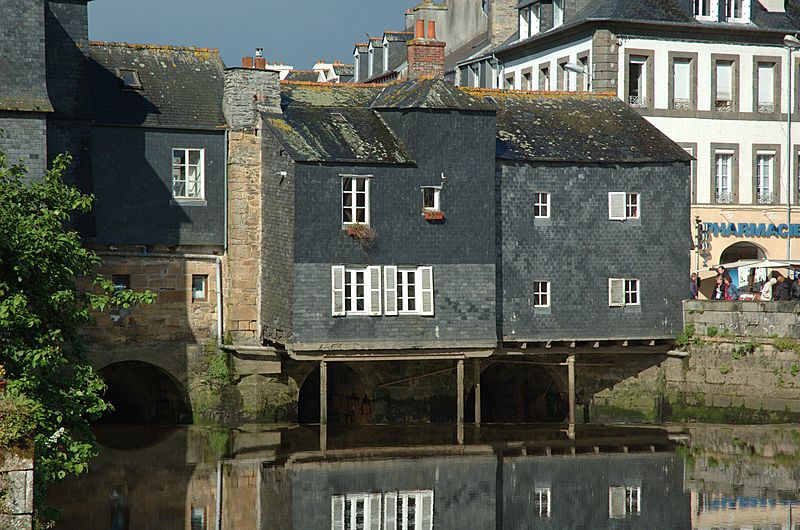
2.  Pont de Rohan in Landerneau, France is one of 45 inhabited bridges in Europe.

3.  The Cogan House Covered Bridge is a Burr arch truss covered bridge over Larrys Creek in Cogan House Township, Lycoming CountyPennsylvania. It was built in 1877 and is 94 feet 2 inches (28.7 m) long. 

4.  A covered bridge in West Sumatra, Indonesia (1877-1879).


John Cale: The Endless Plain Of Fortune (Link)

Monday, September 3, 2012

IT'S A POOR HEART THAT NEVER REJOICES (LEAVING IT UP TO YOU)


 Tony Luton was just a merry-eyed dancing faun, whom Fate had surrounded with streets instead of woods, and it would have been in the highest degree inartistic to have sounded him for a heart or a heartache.


The dancing of the faun took one day a livelier and more assured turn, the joyousness became more real, and the worst of the vicissitudes seemed suddenly over.  A musical friend, gifted with mediocre but marketable abilities, supplied Tony with a song, for which he obtained a trial performance at an East End hall.  Dressed as a jockey, for no particular reason except that the costume suited him, he sang, “They quaff the gay bubbly in Eccleston Square” to an appreciative audience, which included the manager of a famous West End theatre of varieties.  Tony and his song won the managerial favour, and were immediately transplanted to the West End house, where they scored a success of which the drooping music-hall industry was at the moment badly in need.


It was just after the great catastrophe, and men of the London world were in no humour to think; they had witnessed the inconceivable befall them, they had nothing but political ruin to stare at, and they were anxious to look the other way.  The words of Tony’s song were more or less meaningless, though he sang them remarkably well, but the tune, with its air of slyness and furtive joyousness, appealed in some unaccountable manner to people who were furtively unhappy, and who were trying to appear stoically cheerful.


“What must be, must be,” and “It’s a poor heart that never rejoices,” were the popular expressions of the London public at that moment, and the men who had to cater for that public were thankful when they were able to stumble across anything that fitted in with the prevailing mood.


NOTE:  This third excerpt from Saki’s 1913 novel When William Came: A Story of London Under the Hohenzollerns is the last I’ll post here for a while.  


The weakened pulse/diminished spirit/fait accompli London and Britain Saki subtly, surgically and affectingly depicts in the book so closely resembles our own current social and political environment that it is almost too tempting to rely on it as a daily diary substitute. 


When William Came is apparently disfavored by Saki enthusiasts, but since it’s the first example of his work I’ve read, I can’t be concerned with that.  


Engaging in the inevitable search for relevant artistic comparisons, When William Came reminds me of the autumn decay mood John Cale sound-and-word-painted so well on his Paris, 1919 album, but especially of his summer destruction masterpiece, Leaving It Up To You, which laid bare passivity’s evil harvest.


John Cale: The Endless Plain Of Fortune (Link)

John Cale: Leaving It Up To You (Link)