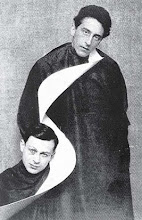
STOCKHOLM.- With
the exhibition Picasso/Duchamp “He Was
Wrong”;
the Moderna Museet in Stockholm sets two giants, Pablo Picasso and
Marcel Duchamp, up against each other for the first time. They are often
regarded as the two most
influential artists of the 20th century – Picasso, who personified the modernist painter, and Duchamp, the
indifferent ironist
and chess genius, who challenged painting and transformed art into a maze of intellectual amusements. Now, visitors to the Moderna Museet have a unique opportunity
to witness this battle of giants and see where it
leads. They may appear incompatible when contrasting the purpose of painting,
and the eye versus the mind:
“If only we could pull out our brain and use only
our eyes.” - Pablo
Picasso
“I was interested in ideas, not in visual
products.
I wanted to put painting again in the service of the mind.” - Marcel Duchamp
Pablo Picasso and Marcel Duchamp are often seen as contraries. And admittedly, although they were often in each
other’s immediate surroundings and shared many patrons and
collectors,
they nevertheless appear to have manoeuvred in totally different worlds. They were so different that their respective ideas
on what art should be and can be seem irreconcilable, and yet from their
extreme positions they simultaneously exerted incalculable influence on the
destiny of modernism.
Indeed, the author Octavio Paz once wrote:
‘Perhaps the two painters who have had the greatest influence in this century
are Pablo Picasso and Marcel Duchamp. The former with his entire oeuvre; the latter with one single work, which
is a veritable negation of the modern sense of
work.'
The exhibition Picasso/Duchamp “He Was Wrong” represents a passionate confrontation between what are perhaps the greatest of rivals in 20th century art. Reflecting on the resistance each artist felt towards the other is especially
meaningful given that 2012 is the centennial anniversary of the first meeting
between Picasso and Duchamp. The contrasts between the two
artists will be explored, from Picasso’s fascination with the Minotaur to Rrose Sélavy, Duchamp’s feminine
alter ego.
Before Picasso died in 1973, he
had noted, with rising resentment, that other artists were challenging his legacy. According to Picasso’s biographer, John Richardson,
the growing number of young artists who preferred Duchamp was
something that Picasso could never reconcile. Richardson writes: “If it had
been Matisse, who was always a rival, it wouldn’t have mattered. But who were
they looking up to on the other side of the Atlantic but Marcel Duchamp of all people! Picasso despised him.”
Allegedly, Picasso’s only comment on hearing that
Duchamp had died was: “He was wrong.”
NOTE: The
Stockholm Moderna Museet (see the announcement excerpt
above) has had a superb idea for a late
summer art exhibition, one which fortunately extends until early next March, a fact any
reader planning a trip to Stockholm should note.
Gallery and museum summer shows often seem based on will-of-the-wisp curator ideas allowing novel, rubric-referenced assembly and display of combinations of famous and store room artworks, occasionally supplemented by borrowed pieces. That description might apply to Gaughin-Cezanne-Matisse Visions of Arcadia, which we viewed at
the Philadelphia Museum of Art on Thursday, although the comment is in no way intended to deride the quality of the show, which is superb and should be visited and re-visited by anyone with the time and
pocketbook to do so. (Museums have gotten so expensive! It's a scandal.) Visiting the PMA, we also enjoyed (unexpectedly) the works of 20th century Pennsylvania artists Wharton Esherick, Benton Spruance and Frederick Harer. The best part of post-college education truly is striking out on your own and leaving the Hit Parade behind.
But the Moderna Museet's idea is truly clever and relevant and should animate anyone seeking to explore with their minds and
eyes The Nub of Modern Art and the subject's logical and imaginative limits.
The illustrations here (from the top down) include Picasso's La Femme A La
Collorette Bleue (1941), Duchamp's Fountain (1917), Picasso's Guernica (1937),
Duchamp's The Bride Stripped Bare By Her Bachelors, Even (1915-23), Picasso's
La Source (1921) and Duchamp's Bottle Rack (1914).
The image below, taken from the Bundesarchiv files, shows Guernica following its air bombardment by
the Germans and Italians at the behest of the Nationalists. It serves as a reminder that art's limits are congruent with man's and his capacity to kill and ruin everything for every conceivable reason.