Monday, September 27, 2010


Sunday, September 26, 2010
John Vachon, Marilyn: August, 1953; Tom Clark's Beyond The Pale; Newly Revealed Oscar Wilde Letters -- Two Nations Divided By A Common Language

From ArtDaily.org, 9-25-10: "In another of the pictures, a comically frightened-looking Monroe is in the clutches of a taxidermy bear."
The amusing photograph above appeared on the ArtDaily.org website yesterday as part of a publishers's announcement for the new Calla Editions book, Marilyn: August 1953, released this week.
The photographs contained in the book were taken by LOOK magazine photographer John Vachon, on assignment in Alberta, Canada, where Monroe was filming "River of No Return" with Robert Mitchum.
According to the article: "An injured ankle prevented Monroe from filming, allowing Vachon to have several days to shoot the Hollywood icon. Only three of photos from the sessions were published in an October 1953 LOOK story. The book will feature photos of Monroe and then fiance, baseball legend Joe DiMaggio snuggling."
I mention all this here for two reasons. First, I would not wish to stand in the way of the Marilyn Monroe Business, which will apparently roll on forever, and I have no problem passively supporting their efforts. Second, I only recently became consciously aware of the extraordinary photographic oeuvre and career of John Vachon. (I say consciously because Vachon's photography career included long stints on staff at Life and LOOK. No one who grew up in the era when those magazines were being published could not have seen many of Vachon's images.)
The source of my Vachon awareness is the "poetry-art blog" of the major American poet Tom Clark called Beyond The Pale. Over the past several months on BTP, Clark has turned his attention to the photographs produced of United States life during the Great Depression by the team of master photographers working under the direction of Roy Stryker at the United States Farm Services Administration. Vachon, who began as a non-photographer staff assistant and found his eye and metier during the FSA project, became part of the remarkable FSA crew, which also included Dorthea Lange, Jack Delano, Arnold Rothstein, Russell Lee and others. Some examples from Tom Clark's site featuring both Vachon's black and white and his extraordinary color photography are found here and here again. Once you see Vachon's work, I think you will agree that it is impossible to overstate his talent.
I would recommend that anyone interested in photography, American history and how present day life is prefigured in past events, consult Tom Clark's blog and become familiar with his extraordinary historical recovery project, as well as the other materials posted there. To date, only a small percentage of the negatives in the FSA photography archive have been published. They were paid for and belong to the American people and we should all avail ourselves of this extraordinary resource.
I don't have Tom Clark's eye, but a couple of Vachon shots that don't appear on Beyond The Pale are posted below, as well as a charming portrait of Vachon himself. I have also included a Joe Dimaggio and Marilyn shot from the new book and an extraordinary Vachon image, which Tom Clark did previously publish showing an up-close look at two peeling billboard advertising posters. The American Pop artist James Rosenquist must have been aware of any influenced by Vachon's keen and knowing eye.


John Vachon: Three photographs of Armistice Day Storm, November 11-12 1940 (top Lyman County, South Dakota; Center: Watkins, Minnesota; Bottom: Draper, South Dakota).

John Vachon, May 1940 Farm Services Administration photograph of billboard with peeling posters.

John Vachon: Mrs. Ballnger, Wife of an FSA borrower, March 1942, Flathead County, Montana


John Vachon

Because of the ridiculous number of Google News Alerts I have signed up for over the years, very little of little importance gets by me and escapes my attention. I can reliably report to you that the Parmenides front remains (and is likely, in my opinion, to remain) quiet and that all that ever occurs on the Heraclitus border are frequent nearly identical-in-every-instance reminders that change is constant (pretty funny, I think).
Oscar Wilde, however, remains fertile daily news territory, almost on the order of Justin Bieber or Lady Gaga. Not a day goes by without multiple Wilde mentions and citations. Usually they take the form of witty ripostes or ironic observations. Re-reading The Picture of Dorian Gray recently, I was astonished to see that, like the Bible and Shakespeare, Wilde seems to be the source and author of most of the thoughts people try to express and claim as their own.
This week's Wilde story was a little different and involved a cache of five letters written by Wilde to a young London editor he apparently admired named Alsagar Vian in 1887, which were auctioned in England last week for about L34,000, exceeding the L10,000 pre-sale estimate.
The letters, which have been in the possession of Vian's heirs until now, are said to contain more documentary evidence than has heretofore been available about Wilde's homosexual leanings, which are alleged to be revealed in his repeated invitations for Vian to meet and dine with him to discuss literary and magazine editorial matters.
Not having read the letters in their entirety, I cannot comment reliably on the accuracy of this, but among the excerpts that have been published in the newspapers, I did notice this highly amusing interpretation by the Indian press agency ANI (which was widely picked up and republished in the Indian news) concerning the "key" fifth and final letter.
ANI reported yesterday that:
"In the final letter, he went at great lengths to encourage a naked meeting over a flask of wine".
"In the final letter, he went at great lengths to encourage a naked meeting over a flask of wine".
However, what the text of the letter actually says is:
"Come and dine at Pagani's in Portland Street on Friday, 7:30 pm. No dress, just ourselves and a flask of Italian wine."
Readers of Wilde's letters (and people generally familiar with the manners of Wilde's time) will already be aware that Wilde was extending a more or less casual invitation to Vian to dine in a public restaurant that did not require formal evening attire, rather than one where his companion would be asked to pose for an updated version of Manet's "Le Dejuener Sur L'herbe".
Funny, I think.

Edouard Manet, Le Dejeuner sur l'herbe, 1862-3

Oscar Wilde letter to Alsagar Vian, 1887
Saturday, September 25, 2010
Weekend or Any Time -- "Breakfast Biblical Burrito" -- Paula Wolfert's and Mine; Moroccan Bread
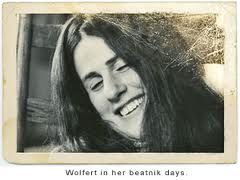
One of the cookery writers I like and admire most is Paula Wolfert, an American who is well-known for her wonderfully written books that record her travels and collect the authentic recipes she has gathered in the Mediterranean, North Africa and the Levant.

Her Couscous and Other Good Food From Morocco inspired us in part to visit that country and we've cooked extensively and successfully from the book. It's an invaluable resource and wonderful to read and reread (along with some Paul Bowles if you're so inclined). If you have never made an authentic couscous, slowly swelling the grains while infusing them (and your kitchen) with the aromatic cooking broth, you are missing one of life's great pleasures. And purchasing a couscousiere is an affordable, practical luxury that makes preparing couscous easy and will pique your friends' interest when they come to visit, I hope, for a Moroccan feast.

A "Breakfast Bibilical Burrito" variation containing avocados and what appears to be a fresh Mexican cheese on tortillas
A few years ago, I visited Ms. Wolfert's website and noticed that we basically ate the same thing for breakfast, which can be described as an herb-y tomato salad or relish on bread. She calls it her "breakfast bibilical burrito" and says the following about it:
"When I was doing field research for my book, Mediterranean Grains & Greens, in that part of the Turkish countryside along the Euphrates where so much of the Bible is set, I noticed that often when I visited homes the hostess wouldn't have any time to really sit down and eat. She was too busy cooking and tending her children.
However, in one house, when we were all supposed to be napping, I saw my hostess take a whole onion, throw it into some hot embers, then later remove it, smash it, then put it on a heated round of flat bread. She spread on some hot red pepper paste thinned with olive oil and a sprinkling of dried mint, then rolled it up and sat quietly eating it with gusto.
When she caught me watching her, she beckoned me, took my arm in hers, then stuffed a piece of the rolled bread into my mouth. It was wonderful!
"You can also add tomato and cheese to this dürüm," she told me in sign language. (In Southern Turkey, dürüm is the word for a round flat bread made with hard wheat flour; in other parts of the country it's called sikma).
Such was the inspiration for what I have dubbed my "breakfast biblical burrito"...which I've been eating on and off for breakfast the past five years. A secondary inspiration was the classic Israeli kibbutz breakfast of fresh tomatoes, onions, greens, peppers.
At home in the U.S., I use an old-fashioned flat toaster grid over my gas stove top to gently heat either the flat semolina bread, a flour tortilla or a fresh piece of lavash. Once heated, I slip in several chopped up cherry tomatoes; a seeded, cored and diced jalapeno; a little chopped green pepper; some parsley, mint and crumbled feta cheese. I add a trickle of olive oil and a pinch of salt for flavor, then roll my "burrito" up and eat it along with a cup of coffee. Yes, it's messy...but very good!"
This is a recipe that allows ultimate freedom in the types of tomatoes you use (obviously summer affords the most possibilities, but grape tomatoes in the winter provide good flavor and a nice texture), the herbs and spices you add, whether or not to include cheese and, if you do, which cheese to choose (feta is great, however) and the type of bread.
But it's very healthy, delicious, satisfying, easy to keep interesting and difficult to tire of.

Moroccan bread
One of Paula Wolfert's recipes we used to make all the time and really should prepare again (I really want to teach Jane to bake bread) is her traditional Moroccan bread. It's a bit of a reach to say that something is the "best bread in the world", but this is extremely good. (Personally the bread I like best is one based on Elizabeth David's basic wheaten loaf recipe included in Traditional English Bread And Yeast Cookery that is baked under the La Cloche clay oven).
All that being said, the bread we ate on a daily basis in Morocco was incomparable, as was the hotel where we stayed, the legendary La Mamounia, beloved palace of Cecil Beaton, Winston Churchill and Paul McCartney. The day we arrived there as relatively young and inexperienced travelers (during one's first trip to Morocco, it's extremely easy to feel inexperienced), a dishonest cab driver tried to take advantage of our unfamiliarity with the local currency by making us pay far more that the correct fare. Seeing this, a La Mamounia staff member wearing native Berber garb (including yellow upturned shoes) came to our rescue, striding out from the hotel, disdainfully throwing the correct amount at the driver, and then spitting at him elegantly. (I'd never seen that done before or since.) We then entered La Mamounia's grand lobby and encountered a man who bore a strong resemblance to Sidney Greenstreet sitting in a large chair that seemed too small for him wearing a fez.
That was the beginning of a memorable trip. There are some very enjoyable Moroccan wines, by the way, the best orange juice in the world, and pastis-type drinks really enhance Marrakech's otherworldly, somewhat psychedelic atmosphere. And remember, only mad dogs and Englishmen go out in the midday sun.
All that being said, the bread we ate on a daily basis in Morocco was incomparable, as was the hotel where we stayed, the legendary La Mamounia, beloved palace of Cecil Beaton, Winston Churchill and Paul McCartney. The day we arrived there as relatively young and inexperienced travelers (during one's first trip to Morocco, it's extremely easy to feel inexperienced), a dishonest cab driver tried to take advantage of our unfamiliarity with the local currency by making us pay far more that the correct fare. Seeing this, a La Mamounia staff member wearing native Berber garb (including yellow upturned shoes) came to our rescue, striding out from the hotel, disdainfully throwing the correct amount at the driver, and then spitting at him elegantly. (I'd never seen that done before or since.) We then entered La Mamounia's grand lobby and encountered a man who bore a strong resemblance to Sidney Greenstreet sitting in a large chair that seemed too small for him wearing a fez.
That was the beginning of a memorable trip. There are some very enjoyable Moroccan wines, by the way, the best orange juice in the world, and pastis-type drinks really enhance Marrakech's otherworldly, somewhat psychedelic atmosphere. And remember, only mad dogs and Englishmen go out in the midday sun.
Here is the recipe:
Moroccan Bread
Ingredients
- 18 g active dry yeast
- 1 teaspoon granulated sugar
- 500 g unbleached flour
- 150 g whole wheat flour
- 2 teaspoons salt
- 8 tablespoons lukewarm milk
- 1 teaspoon sesame seeds
- 1 tablespoon anise seed
- cornmeal, for sprinkling
Directions
- Soften the yeast in 1 tbsp sugared lukewarm water.
- Let stand a few minutes, then stir and set in a warm place until the yeast froths up.
- Meanwhile, mix the flours and salt together.
- Stir the yeast into the flour, then add the milk and enough lukewarm water to form a stiff dough.
- The amount of water you need will depend on your particular flour but I need about a cup.
- Add no more than 1/4 cup water at a time until you can see the dough coming together.
- To knead by hand, turn the dough out onto a board and knead hard, adding water if necessary.
- Knead for 10-15 minutes until smooth and elastic.
- Alternatively, use an electric beater with a dough hook, which takes 7-8 minutes at a slow speed.
- Towards the end, add the spices.
- Split into two balls and let stand 5 minutes.
- Meanwhile, lightly grease a mixing bowl.
- Transfer the first ball of dough into the greased bowl and form a cone shape by holding the dough in one hand and rotating it against the side of the bowl.
- Turn out onto a baking sheet that has been sprinkled with cornmeal.
- Flatten the cone with the palm of your hand to make a disc that is about 5-6 inches across and slightly raised in the center..
- Repeat with the second dough ball.
- Cover with a damp towel and let rise.
- Allow to rise 2 hours but you might find that rising time is excessive and can be shortened.
- Preheat the oven to 200 C or 400°F.
- Using a fork, prick the bread around the sides 3-4 times.
- Bake on the center shelf of the oven for 12 minutes, then lower the heat to 150 C or 300 F and bake 30-40 minutes more.
- Remove and let cool.
- Cut into wedges when you're ready to serve.
As an "unannounced bonus" (as far as the title of this post goes), please find below Paula Wolfert's recipe (adapted slightly by us after a lot of use) for the Greek mezze dish Taramasalata. This is simply unbelievably good and would even go nicely with the bread, anise seed flavoring and all. This recipe appears in her book Mediterranean Cooking. Wolfert later revised this book along more dietetic, "heart healthy" lines. I recommend that interested readers seek out the original publication, which is filled with excellent, beautifully and clearly written, recipes.
TARAMASALATA
1/3 CUP TARAMA
1 CUP TORN CRUSTLESS WHITE BREAD (APPROX. 2 SLICES), SOAKED IN WATER AND SQUEEZED DRY.
1 TABLESPOON GRATED ONION
1/4 CUP FRESHLY SQUEEZED LEMON JUICE
3/4 T0 1 CUP OLIVE OIL
FINELY CHOPPED PARSLEY
PLACE ALL INGREDIENTS IN FOOD PROCESSER AND ADD 1/3 CUP OF THE OIL. BLEND UNTIL SMOOTH AND THEN ADD REMAINING OIL WITH MOTOR RUNNING.
SERVE COLD WITH GARNISH OF FRESHLY CHOPPED PARSLEY.

Taramasalata

Tarama (foreground); Taramsalata (rear)

The famous Moroccan "preserved lemon"



The Flying Burrito Brothers (original Gilded Palace Of Sin line-up)
Thursday, September 23, 2010

El Bulli Bull (Vanity Fair -- October 2010)

Christian and Faithful Entering Into Vanity Fair -- The Pilgrim's Progress
Yesterday while waiting for a train back to Philadelphia at Penn Station in Manhattan, I broke down and violated my “no Vanity Fair” rule.

I shouldn’t have. It’s a pompous and stupid magazine that mainly exists, I think, to show how far one man can fall and the banality of utter mediocrity.
I mean, Graydon Carter – this guy used to edit Spy. What happened?
One of Vanity Fair’s big problems is that its editors run all of the prose published in the magazine through the the extremely constricting and, at this point, clichéd VF style and usage press, causing all of the writers (and there are some distinctive, talented voices who publish in its pages from time-to-time; n.b., this does not include James Wolcott) to sound basically the same. The magazine even manages to continually de-fang the usually entertaining and controversial Christopher Hitchens.

The Merchandisers at Vanity Fair -- The Pilgrim's Progress
When done properly, as in the case, say, of Cosmopolitan during Helen Gurley Brown’s long stewardship, this kind of hands-on editorial treatment/quality control and practice can benefit a magazine. There is no reason for the Cosmopolitan “brand” to represent anything more or different than it does. The magazine is nothing but its endlessly recycled sex-and-the-single-girl self and the embodiment in a nice, non-ennui-ridden, way of the old saw, plus ca change, plus c’est la meme chose.

Chef Fernan Adria
But Vanity Fair purports to be significant when it is, in fact, nothing more than hundreds of pages that are essentially extensions of Graydon Carters’s dishonest, preening, moral exhibitionism.
The article in the current issue that caught my eye and made me ill and angry was Jay McInerney’s piece on Ferrnan Adria’s much too publicized restaurant El Bulli in Roses, Spain. McInerney is not an untalented writer, although it’s sad that he seems to have found his niche and apogee in writing occasional, superficial magazine pieces. I assume he didn’t plan things to turn out this way.
But the world spins off its axis in this piece written with an almost biblical solemnity where McInerney memorializes Adria’s cooking of this thing you and I call a “meal” which, if we’re lucky, we get to consume three times a day.


But the world spins off its axis in this piece written with an almost biblical solemnity where McInerney memorializes Adria’s cooking of this thing you and I call a “meal” which, if we’re lucky, we get to consume three times a day.
Top: Rice and Parmesan Cake
Bottom: Melon "Caviar"
I really can’t bear to quote much of the prose, but in terms of populating the Sentences We Wish We Hadn't Bothered To Finish Department section of this piece, let’s just mention these:
The Deconstructed Martini
“It begins with a glistening olive-colored sphere , wobbling on a spoon as you raise it toward your lips, exploding in the mouth to unleash a bath of intense olive-flavored liquid. Then, as the waiter has instructed, you lift the silver atomizer to your mouth and spray the gin-and-vermouth mixture on your tongue. In your case, three sprays for good measure. Or seven. The waiter didn’t specify how many sprays.”
On The Decision To Close El Bulli
“As El Bulli evolved and became more and more successful, it became less and less accessible. At each stage, pushing the boundaries of cuisine required a respite from the demands of running a restaurant. Viewed from this perspective, closing the restaurant is the final stage in its creative evolution.”
And for a finale, Iron Chef Mario Batali’s frank evaluation of Chef Adria’s significance:
“Dudeski, he is simply the most influential chef for chefs of our time……True to his Catalonian roots – like Dali, Casals and Miro – he created a new way to work with the raw material that challenges a lot of what had been considered the ‘rules’ or the ‘way’ to eat and cook.”

Salted Peanut and Corn Snow Wafer
I don’t question Batali’s opinion about the reason chefs pay attention to Adria. However, I think the comparisons to Dali, Casals and Miro and the references to creativity with the “raw materials” are silly, inapposite/incorrect and pretentious. Although I imagine Adria must be a better and more talented person than heartless, untalented provocateur artist Damien Hirst (it’s hard to imagine that he wouldn’t be), if you’re going to speak about creativity with raw materials, I think a comparison with wretched Hirst would be a far more accurate one on the terms Batali assigns to the analysis.
I have had and enjoyed “molecular cuisine” meals at Grant Achatz’s (an Adria disciple) Alinea in Chicago. They’re like a getting on a fancy fairground ride or, to an extent, looking in the Fun House mirror. They do cause you to consider things you probably haven’t considered previously and to have new sensory experiences.

Game a la Mode
But they are also abstract and denatured in the extreme and, in the context of food, which comes to us because of our position at the top of the food chain in the irreducible competition between plant and animal species that constitutes life on earth, there is something inescapably immoral about Adria's whole enterprise.

Basil foam
You really need to ask yourself how much food that could nourish hungry people is wasted in Adria’s kitchen every day while the process honing, refining, deconstructing and denaturing takes place. I am not a moral exhibitionist like Graydon Carter, but frankly it is sickening.
Adria says, “Cuisine is entering a new phase. There will be cooking at Harvard.”
I suppose there will be.
Decline. And fall.


Top: Iberian Ham "False" Tapioca
Middle: Frozen Chocolate Air
Bottom: Letter Soup


Top: Map of Costa Brava, Spain
Bottom: Christian and Faithful Mocked By The Scorners Of Vanity Fair -- The Pilgrim's Progress
Subscribe to:
Posts (Atom)