Showing posts with label Puffin. Show all posts

Saturday, February 11, 2012

The Wheels On The Bus


Teacher Accused of Spraying Febreze on "Fishy" Student

Mother received written apology.

By DANIEL MACHT


|  Thursday, Feb 9, 2012  |  Updated 3:00 PM EST


A puffin and a capelin


“This time the teacher got a time out.

An elementary school teacher in Newfoundland, Canada has reportedly been put on paid leave as district officials investigate a claim she sprayed a student with an odor eliminator to mask his fishy-smelling lunch.

Patti Rideout told CBC News she was “very hurt and very angry” after learning the teacher of her 10-year-old son, Christian Roberts, had put him in the hallway then sprayed him with Febreze last week.

Other kids at Twillingate Island Elementary School had teased him over the fried capelin meal she’d made him, she said.
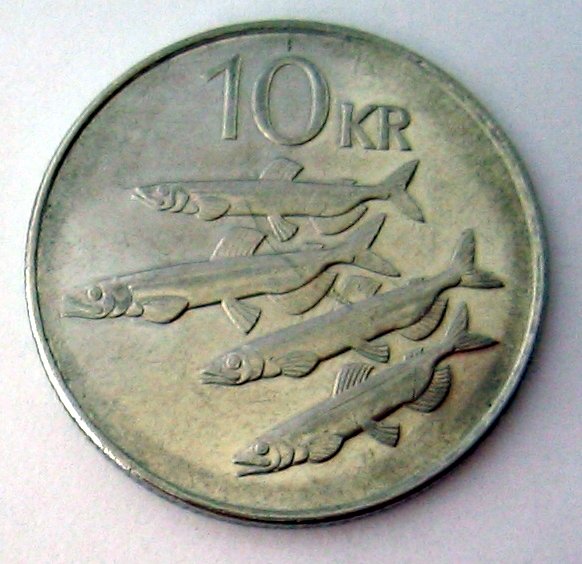


10 Icelandic Krona is worth $.08 USD (i.e., 2 cents per capelin)


"I feel like he's been embarrassed, bullied, and I think what she [did] was very disgraceful," Rideout told CBC News. "I think my son was treated not like a human being — I think he was treated like a dog, or a cat … I'm very hurt and very angry over this."

Rideout told CBC that when she first called her son’s teacher for an apology she hung up.

After taking her concerns to the school board, Rideout received a written apology from the school’s principal and vice principal, St. John’s newspaper The Telegram reported.

“The teacher has offered to make an apology to your son in front of the class,” the letter said.”


NOTE

To me, this is another significant sign of things becoming unglued, the wheels coming off the bus.  SO inappropriate, SO unprofessional, SO unkind.  It sounds as though Mrs. Rideout prepared an excellent lunch for her son Christian.

I never knew what capelin were until this reading this, but now that I do I imagine I’d like them.  I’ve always liked “fishy” fish like smelt and my doctor has recommended that I eat them regularly.  (And apparently capelin roe is also very good.) 

We use Febreze at home.  It’s an excellent product, but not for the purposes described in the article.

Horrible harpy martinet anonymous teacher-person. The article should have identified her by name so that we can all avoid her.


I’m sorry to see Febreze dragged into this.

Monday, May 30, 2011

Ice Blink; Mahogany Flotsam (Captain Hatteras 2)


Charles W. Swithinbank, Ice Blink photograph, from Illustrated Glossary of Snow and Ice. Cambridge,  Scott Polar Research Institute, 1969.


I.

Soon the flocks of birds, more and more numerous, petrels, puffins, and warblers, inhabitants of these desolate shores, showed they were nearing Greenland.  The Forward was heading north at speed, leaving to leeward a long trail of black smoke.

        At about eleven on Tuesday, 17 April, the ice-master reported the first sight of ice blink. [1]  It was at least twenty miles to the north-north-west .  Despite the very thick clouds, this strip of dazzling white brightly lit up the whole of the atmosphere near the horizon.  Experienced sailors on board could not mistake this phenomenon, recognizing from its whiteness that the blink had to come from a vast field of ice situated about thirty miles beyond the range of vision, being even produced by a reflection.


[1]   The remarkable, resplendent colour the air becomes when above a great extent of ice.


"Ice Blink",  photograph, Joanna Bury, 2005


Atlantic Puffin in Iceland


II.


Attributed to William Hodges, R.A. (1744-97), Ice Islands with Ice Blink, 1773


“Hence, gentlemen, it must be agreed that America is completely detached from the polar landmasses and the waters of the Pacific move around its coasts and into the Atlantic.  Anyway the greater height of the waters of the Pacific is another confirmation that they flow toward the seas of Europe.”

         “But there must be facts supporting this theory, and if there are”, Shandon added with a certain irony, “our universal savant will surely know them.”  


Narwhal whales "tusking" in Arctic waters 


         “Upon my word”, replied the latter with pleasant  satisfaction, if it interests you, I will say that whales wounded in the Davis Strait were captured sometime later near Tartary with European harpoons in their flanks.” 


        “So, unless they rounded Cape Horn or Cape of Good Hope, they must necessarily have gone round the northern coast of America.  That’s indisputable, doctor.”

        “If, however, you were still not convinced, my good Shandon,”  said the doctor smiling, “I could produce further facts, such as the flotsam Davis Strait is full of, larches, aspens, and other tropical wood species.  Now we know that the Gulf Stream would prevent this wood from entering the strait, so when it comes out it can only have got in through the Bering Strait.”


Flotsam: Lifeboat from the Edmund Fitzgerald, 1976


         “I’m convinced, doctor, and I admit that it would be hard to remain a disbeliever with you around.”

           “Upon my word,” said Johnson, “abreast is a timely illustration of what we’re talking about.  I can see a piece of wood of fine size; if the commander allows we’ll go and fish out this tree-trunk, hoi it on board, and ask  it what country it hails from.”


"a piece of wood of fine size"


            “Good idea” said the doctor; “the example after the rule.”

               Shandon gave orders; the brig headed for the piece of wood and soon the crew had hauled it on deck, not without difficulty.

               It was a mahogany trunk, gnawed by worms to its very heart – otherwise it could not have floated.


Duke, the "Dog-Captain", moving the story forward


Herbert Ponting, Ice Grotto within ice-berg, 1911


Petrel chick


Black-cap warbler


Reader Note 1: Inevitable musical accompaniment is Iceblink Luck by Cocteau Twins

Reader Note 2:  Text excerpted from the marvelous  The Adventures of Captain Hatteras by Jules Verne (1864).  Translation with an Introduction and Notes by William Butcher.  New York, Oxford University Press, 2005.    For previous Captain Hatteras post, please see Here.

Reader Note 3:   Cause and effect explanation.  Steamy, fevering heat arrived in SE Pennsylvania several days ago when the air conditioning was broken (an icicle or sharp branch severed by the winter storms slashed a compressor wire) and seems already to have assumed its all-summer berth.   Although a/c systems are once again "go", for a number of reasons, including the differing internal thermostats of the residents of Signal Hill and their varying degrees of "influence", things are cooling down quite slowly here.  Reading The Adventures of Captain Hatteras chills and clears the air; this meteorological aspect of reading Verne's novel should be the subject of someone's book column somewhere or possibly (my favorite notion always) a one-act play.  I intend to explore William Hodges' career here in more detail in the future.  Things have been connecting up happily (I think) and unexpectedly of late.