Thursday, February 2, 2012
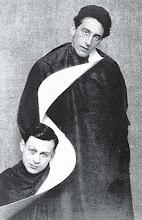
There Is Mourning In Kandor: Artist Mike Kelley Passes Away
LOS ANGELES (AP).- Artist Mike Kelley, described by colleagues as an "irresistible force" in contemporary art, has died, police said Wednesday. He was 57.
Kelley was found at his home Tuesday and it appeared he had committed suicide, South Pasadena Police Sgt. Robert Bartl said, without providing further information on the artist's death. An autopsy was pending.
"Kelley's work in the 1980s was part of how one defined the Los Angeles arts scene. He had a remarkable ability to fuse distinction between fine and popular art in ways that managed to perturb our sense of decorum," said Stephanie Barron, senior curator of modern art at the Los Angeles County Museum of Art.
A family friend who was concerned about Kelley went to his home and called 911, Bartl said.
The friend told investigators that Kelley had been depressed because he had recently broken up with his girlfriend, but no note was found, Bartl said.
"Mike was an irresistible force in contemporary art. ... We cannot believe he is gone. But we know his legacy will continue to touch and challenge anyone who crosses its path. We will miss him. We will keep him with us," Kelley's studio said in a statement that the Los Angeles Times published on its website.
Kelley's work was included in the upcoming 2012 Whitney Biennial out of New York.
Kelley used many mediums and source materials. "He was always breaking boundaries and challenging convention," Barron said.
Some of his greatest works were large scale installations, she said. "Some of his room-sized, full-gallery sized extravaganzas are truly impressive."
Kelley was a student of John Baldessari. His 1994 retrospective organized by the Whitney, which came to LACMA in 1995, established him as a major figure in the art world, Barron said.
"His work was widely collected and exhibited internationally. He had a voracious appetite for all kinds of art. He was enormously curious and worked incredibly at his craft. He was never afraid to thing really big. Artists like that don't come around very often," she said.
Born in Detroit, Kelley founded the band Destroy All Monsters with three others in 1974.
He left the band in 1978 to attend California Institute of the Arts in Valencia, near Los Angeles.
"He was extremely intense, very serious, phenomenally well read. He would go very deep into his subjects, a real artist scholar but with a real passion for whatever he was investigating," Barron said.
After encounters with him, Barron said, "I always came away learning something new, thinking about things differently and in awe of his curiosity."
Although she corresponded with him in the last couple of weeks, the last time she saw him was a month ago.
"It's incredibly sad. It's hard to imagine somebody with the life force and intensity that Mike brought to bear is no longer with us. His impact will be seen with distance as all the more powerful and we'll have to begin to process this," Barron said.
Glacier Thief Arrested In Chile -- Believed To Be Selling Jorge Montt Ice For Designer Cocktails (from The Guardian, Feb. 1)
A chunk of the 5,200kg of ice, believed stolen from the Jorge
Montt glacier, which was discovered by police in a refrigerated truck. Photo:
Fiscalia Regional de Aysen/EPA
Rory Carroll, Latin America correspondent
guardian.co.uk, Wednesday 1 February 2012 18.25 EST
Climate change sceptics have acquired a new explanation for why
glaciers are retreating: it's
not global warming, it's theft.
The Chilean General Prosecutor's Office displays bags of ice
allegedly stolen from the Jorge Montt Glacier, more than 1,200 miles south of
Santiago, Chile.
Police in Chile have arrested a man on suspicion of stealing five tonnes of ice from the Jorge
Montt glacier in the
Patagonia region to sell as designer
ice cubes in bars and restaurants.
Local media reported that last Friday police intercepted a
refrigerated truck with an estimated
£3,900 worth of illicit ice
allegedly bound for whiskies,
rums and cocktails in the
capital Santiago.
Jorge Montt glacier site seen from space
Authorities
have accused the driver of theft and are considering adding violation of national monuments to the charge sheet.
Scientists
say Jorge Montt, part of the Bernardo O'Higgins national
park, is retreating by half a mile a year, making it one of the world's fastest shrinking glaciers.
Elevated view of Jorge Montt mooring, Bernardo O'Higgins State
Park, Chile
Environmentalists have cited it as evidence that man-made climate change is warming the planet. Sceptics have cited other explanations for retreating glaciers, but theft
– until now – was not one of them. It may be the only case in which both sides agree human activity was to blame.
Beautiful photograph of Jorge Montt glacier

NOTE: When Jane was in
4th grade, she created a rather sophisticated (for her age) audio-visual
research project about Chile, which first made me aware of the Jorge Montt glacier. Coincidentally, around the same time we also saw a terrific show on the Discovery Channel about Chile and the
country became high on the list of places we would like to visit.
Santiago looked incredibly beautiful and sophisticated and Chile's collision of
sea, sky, ocean, deserts, mountains, and vineyards, not to mention the world's largest
swimming pool (link), was astonishing to behold. Friends and relatives
who have spent time there have all returned with great reports and marvelous
stories.
This story, of course, is both a weird and pedestrian
at the same time. It's essentially petty theft of a lot of ice for small commercial gain.
I'm not sure whether, if offered a glacier ice drink, I would trust the
establishment making the claim to be telling the truth, but perhaps I'd be intrigued enough to
want my Pisco Sour made that way.
Anyway, I think I would be remiss in not
offering here a recipe for Chile's
signature cocktail. This one emanates from Ryan McGrale of No. 9 Park in Boston, a
superb restaurant worth logging significant
travel time to visit. I have occasionally thought that I would be happy living at its bar.
Pisco Sour
1 egg white
2 1/2 ounces Pisco Capel (see note)
1/2 ounce simple syrup
3/4 ounce fresh lemon juice
Angostura Bitters (see note, below)
In cocktail shaker filled with ice, combine egg white, Pisco,
simple syrup, and lemon juice.
Cover, shake vigorously for 15 seconds, and strain into
six-ounce cocktail glass. Top with a few drops of bitters.
Bartenders Note:
In this recipe, any
Chilean Pisco will do, but be aware that Chilean and Peruvian Piscos are not interchangeable. Chilean Pisco is sweeter and has a slightly
lower proof. So if you use the Peruvian stuff, adjust the amount of lemon juice
and simple syrup accordingly. Both kinds are available at many good liquor
stores.
Chilean Amargo bitters are virtually impossible to buy in the U.S., but easy-to-find Angostura Bitters make an acceptable substitute. Yet since, as Ryan McGrale says, they are "sharper and spicier, go a little lighter on the bitters if you're using Angostura."
Music Cue: Ice Fishing At Night -- John Paul Jones (wr. Jones-Blegvad), from The Thunder Thief
The world’s largest swimming pool, Algarrobo, Chile
Wednesday, February 1, 2012
New Year's Day Diaries (Pen, Pencil, Plectrum)
We have decided
(it was Caroline's suggestion) to consider and celebrate February 1st
as New Year’s Day.
Traditional
Gregorian calendar January 1st follows Christmas much too closely, and
invariably the Holiday Season (which we all hope to find enjoyable, but the
measure of joy actually achieved is often in direct proportion to the exhausting efforts
made in its pursuit) and Year both end and begin in a confused and spent state.
January is usually a mental and emotional struggle, regathering and regrouping, and February’s arrival seems like a twilight respite from a dark, dreamed battle.
Therefore,
around here at least, we’re henceforth assigning to January
last-month-of-the-year/ring out the old duties (and thanking its thirty-one
days for allowing one extra moment for clean-up and organization) and Starting Over Today.
We believe
this system will work much better than the previous one. If last night's New Year's Eve dinner with Jane offers any indication, things augur well for our
family and the world.
On Monday (an otherwise rotten day), The Assassin’s Cloak, An Anthology of the
World’s Greatest Diarists (editors Irene and Alan Taylor, Edinburgh, Canongate
Books, 2000), arrived n the mail.
Two really fine New
Year’s Day selections follow.
William Allingham (1824-89)
The
first is from William Allingham, an Irish poet best known for his poem The
Fairies ("Up the airy mountain/Down the rushy glen/We
daren't go a-hunting/For fear of little men..."), his literary
friendships, and his posthumously published Diaries (1905).
February 1, 1867 [London]
"Tennyson is unhappy from his uncertainty
regarding the condition and destiny of man.
Is it is dispiriting to find a great poet with no better grounds of
comfort than a common person? At first
it is. But how should the case be
otherwise? The poet has only the same
materials of sensation and thought as ordinary mortals; he uses them better;
but to step outside the human limitations is not granted even to him. The secret is kept from one and all of us. We must turn eyes and
thoughts to the finer and nobler aspects of things, and never let the scalpel
of Science overbear pen, pencil and plectrum. A Poet’s doubts and anxieties are more
comforting than a scientist’s certainties and equanimities."
George Templeton Strong (1820-75)
The
second, dated ten years earlier, is from George Templeton Strong’s famous Diaries, which were discovered in the 1930s and offer
a vivid, charged, and highly personal account of 19th century life. They are
especially valued for their information and observations regarding Civil
War-related events, as seen from a Union perspective.
Strong was a New York City lawyer (he was
associated with the predecessor firm of the venerable Cadawalader Wickersham
and Taft) and diarist, and his voluminous (2,250 pages) diary has been compared
by the historian Paula Baker to Mary Boykin Chesnut’s parallel southern account
of this period, “A Diary From Dixie”.
Strong’s pre-Civil War description of
life in Manhattan excerpted here paints what seems (from this former
prosecutor's perspective) like a contemporary picture of New York City or,
especially lately, Philadelphia life.
February 1, 1857 [New York]
'An epidemic of crime this winter. ‘Garrotting ‘ stories abound, some true, some
no doubt fictitious, devised to explain the absence of one’s watch and
pocketbook after a secret visit to some disreputable place, or to put a good
face on some tipsy street fracas. But a
tradesman was attacked the other
afternoon in broad daylight at his own shop door in the Third Avenue near
Thirteenth Street by a couple of men, one of whom
was caught, and will probably get his deserts in the State prison, for life –
the doom of two of the fraternity already tried and sentenced. Most of my friends are investing in revolvers
and carry them about at night, and if I expect to have to do a great deal of
late street-walking off Broadway, I think I should make the like provision;
though it’s a very bad practice carrying concealed weapons. Moreover, there was an uncommonly shocking
murder in Bond Street (No. 31) Friday night; one Burdell, a dentist, strangled
and riddled with stabs in his own room by some person unknown who must have
been concealed in the room. Motive
unknown, evidently not plunder."
Happy New Year!
Subscribe to:
Posts (Atom)